
We sometimes ask ourselves whether the driver titled at the end of the championship is necessarily the best of the season. The points allocation system in Formula 1 or other motorsport series is sometimes controversial. Does it really reward the best?
Often this system benefits the most regular competitors, the most economical with their efforts. Sometimes, changes are introduced to the points system to reward panache by eliminating the less good results. But in all cases, it often happens that we regret that penny wise calculations force competitors, especially towards the end of the season, to favor points over fighting for race victory, sometimes spoiling certain races. Or even by emphasizing team strategy - the infamous team orders - which spoile the race in the name of the championship.
There was a time when championships in car racing did not exist. Each race was important in its own right. Like the Dakar, or Le Mans or even Indianapolis in a more recent era. Rallies remained like this for a long time until the creation of the Manufacturers' World Championship, then the Drivers' World Cup in the 1970s and finally the Drivers' World Championship in 1979.
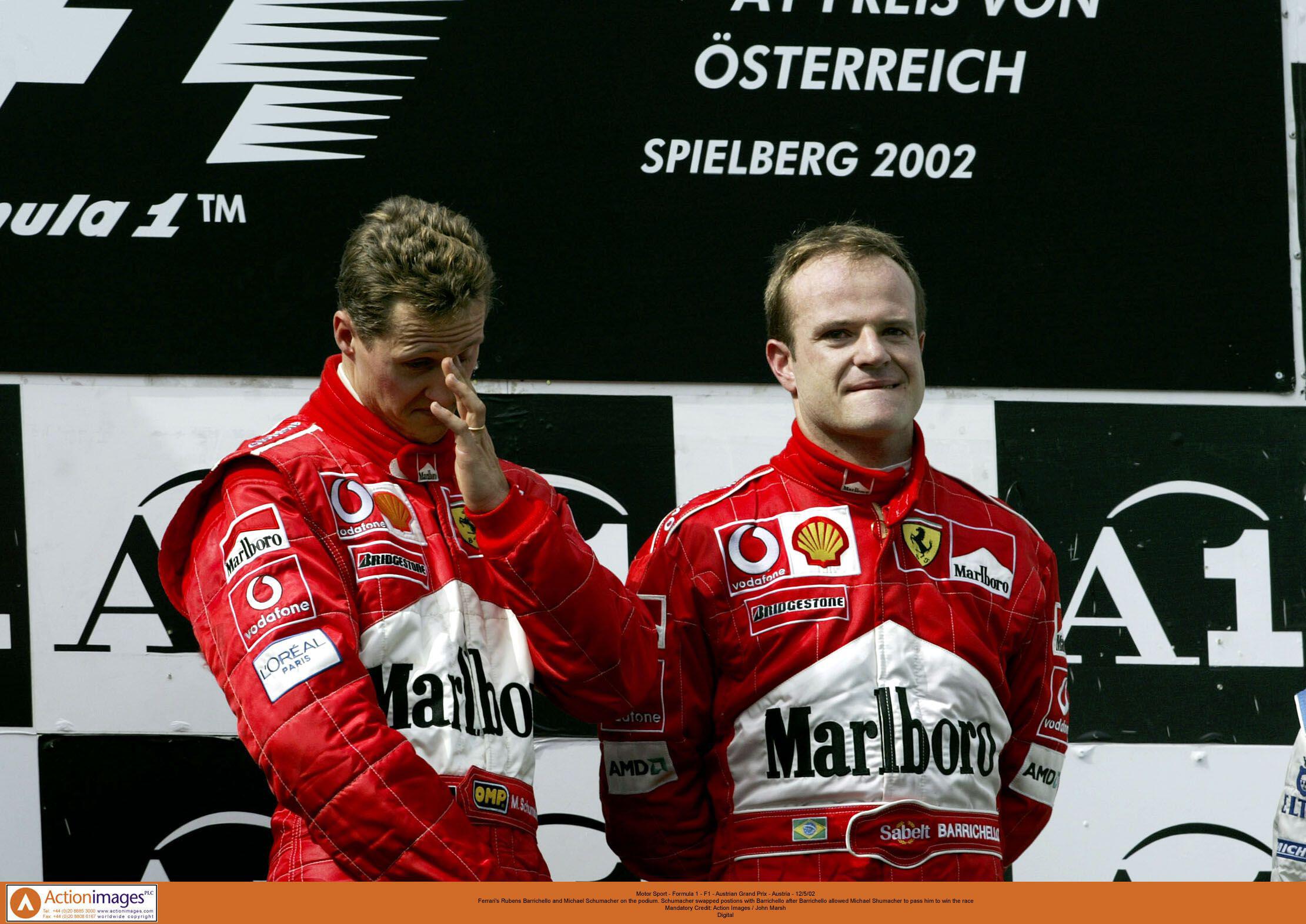
The Formula 1 world championship began in 1950, but the points systems whatever the racing categories are, ends up pushing competitors to sacrifice the race result for the benefit of the title at the end of the season, with an inevitable impact on the show. F1 experienced the worst illustrations of this case with the titles of Nelson Piquet in 1987 and Keke Rosberg in 1982. On the other hand, the obsession with winning the world crown spoiled memorable ends of seasons, as in 1989 and 1990 at the height of the Prost-Senna rivalry.

Therefore, why not consider a more exact alternative to create a more equitable classification in order to address these two issues (a points system that may not be fair or representative of the hierarchy of competitors and the sacrifice of the fight and show during the races for the benefit of the championship)? A ranking that would prioritize each individual race while not making up the season's ultimate goal.
Here's how the idea looks: Let's start with the points classification objective, the easiest to modify. It would be possible to establish a permanent ranking which does not stop at the end of a season, but runs from one season to the next linking them all in a common classification. Thus, we have a hierarchy which crosses several generations of competitors and encompasses them all, making the season championship less important than it is currently.
On the other hand, to satisfy everyone, a secondary ranking, only taking into account the results of a season would award the driver/team with most points in a year, but without it having the same importance as today.
As for the 1st objective, namely a fairer points system representative of the merits of the competitors, there is a lot more work. Certain points must be taken into account.
1st consideration: Include in the hierarchy all those who finish races by awarding points to all drivers classified at the end of each GP.
The number of points to be awarded would not be fixed in advance, but would be determined by the number of cars having actually been classified. These points would therefore vary depending on the number of competitors having completed each race. To do this, let's start by giving a point starting from the last classified and we go up to 1st by adding 1 point to each position, then increasing the gaps as soon as we arrive at the podium, just to give more importance to the top three and even more to the winner.
In the case where, let's say, 15 cars finish a race, the points would be distributed as follows:
15th = 1 pt
14th = 2 pts
13th = 3 pts
12th = 4 pt
11th = 5 pts
10th = 6 pt
9th = 7 pt
8th = 8 pt
7th = 9 pt
6th = 10 pt
5th = 11 pt
4th = 12 pt
Then, the gap starts to increase when the podium is reached:
3rd = 15 pt (3 pts difference with 4th)
2nd = 20 pt (5 pts difference with 3rd)
1st = 30 pt (10 pts difference with 2nd)
Thus, with larger gaps on the podium, panache and victory remain valued. In addition, all those ranked are included in the points, making it possible to establish a hierarchy on merit, including among the last ones.
In the case of 20 cars finishing the race, the same can be done, while increasing the gaps by the same values when arriving at the podium, which will end up giving different points for the same places from a race to another depending on the number of finishers of a given race. This would be fairer than the current system since beating 19 competitors is not the same as winning against 5 or 10.
Certainly, this assessment is not the most accurate in absolute terms, since one may have more merit in winning a race against 5 competitors than against 20 depending on multiple factors. The value of a driver's result who wins by leading from start to finish against 19 drivers who finish behind him is somehow lower than that of a driver who moves up 5 positions by fighting for example to win against only 5 or 10 drivers at the end of the race.
To make this ranking fairer, other points could be earned on other criteria. As for the places gained compared to the place on the starting grid. Again one point per position won. Of course, one could object that the positions gained are not always due to merit and that drivers often climb the ranking thanks to the problems of those who were ahead of them. But not having any technical problems and not making any mistakes unlike the competitors in front is also a sign of merit. Reliability should also be rewarded. The places gained in races would also more often push drivers to give their all for the benefit of the show even if their main goal is the title at the end of the year or the "cross-seasons" points classification.
To give this mode even more weight, it is possible to deduct points from competitors who lose places compared to their starting position.
Finally, to award the title at the end of the year without finding ourselves in a situation similar to the 1982 or 1958 F1 seasons (the world champions of the time, Rosberg and Hawthorn had only won one GP during the season), why not setting a minimum number or percentage of Grand Prix to be won during the season to deserve the title regardless of the total points gathered?


